
Downloads:
Downloads:

Downloads:
ATEX
Directive 94/9/EC imposes requirements on manufacturers and users of equipment intended for use in potentially explosive atmospheres. This directive provides, in particular, for: – approval by a notified body not only of the product (through EC type examination), but also of the manufacturer’s production quality assurance system. – the affixing of the “CE” marking on the labels of the various products. This marking indicates that the product complies with the relevant directives: the ATEX Directive, as well as, where applicable, the Machinery Directive, the Low Voltage Directive, etc. – the distinction between explosive atmospheres caused by the presence of gases, vapors, or mists (code: G = Gas) and explosive atmospheres caused by the presence of air-dust mixtures (code: D = Dust). The certification procedures for equipment for these two types of hazardous atmospheres will differ, and a corresponding “G” or “D” marking is affixed to the label of the certified equipment. – the introduction of design and manufacturing rules aimed at maximizing equipment safety, so that it can operate safely throughout its expected service life: – selection of components, – opening with a special tool, – prevention of device overload using appropriate limiters, – protection against electrostatic charges, parasitic electrical currents, and leakage, – unacceptable overheating, etc. – consideration of the operating conditions of the devices: humidity, vibrations, pollution, parasitic voltages…
Downloads:
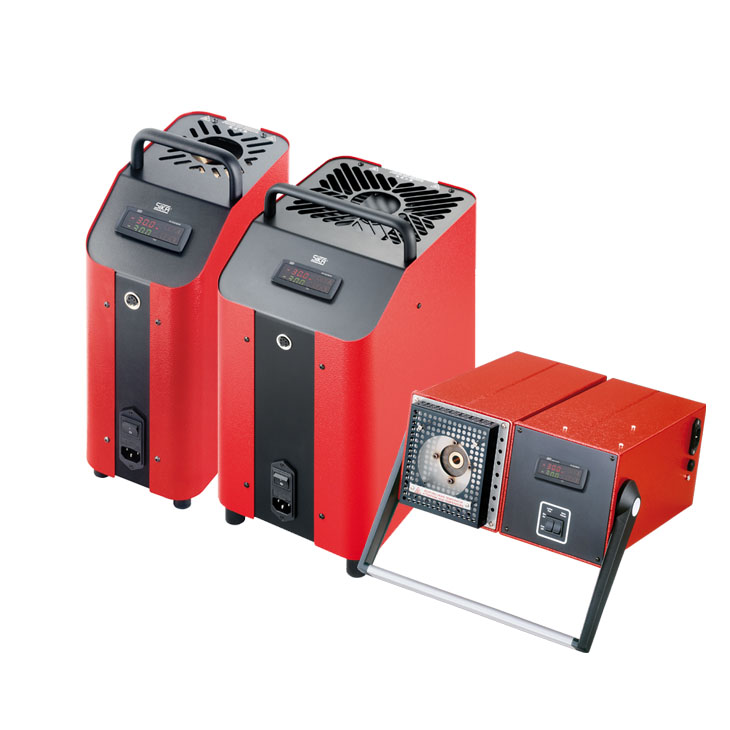
Temperature Calibration Laboratory
Metrology has become an indispensable tool for quality assurance. It is constantly involved at every stage of manufacturing, whether during incoming inspection, in-process inspection, or final testing. Various quality standards require that “measurement and testing equipment” be traceable to national metrology standards and that the traceability of measurements taken on the product be maintained. Our metrology laboratory meets these requirements.
Downloads:
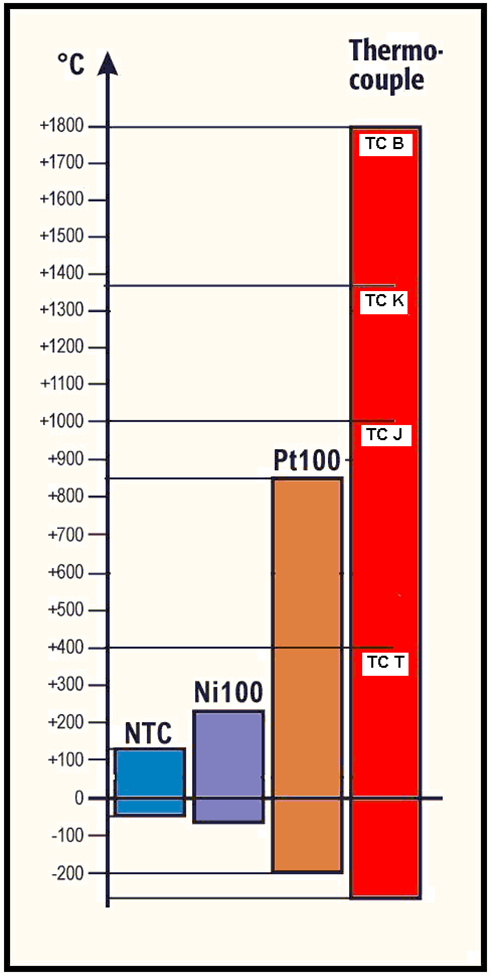
Introduction to Thermometry
Today, temperature measurement is essential across all industries. For the most common temperature measurements, a widely used temperature scale has been developed, known as the “International Temperature Scale” (ITS-90). This scale covers a temperature range from –259.34 °C to +1064.43 °C. Its definition is based on a number of fixed-point temperature phenomena such as: – the triple point, – the boiling point, – the freezing point of certain materials. In practice, the ITS 90 can be closely compared to the fundamental thermodynamic temperature scale. The units of measurement on the scale are expressed in KELVIN, but they are more commonly expressed in CELSIUS.
Downloads:
Extension and compensation cables
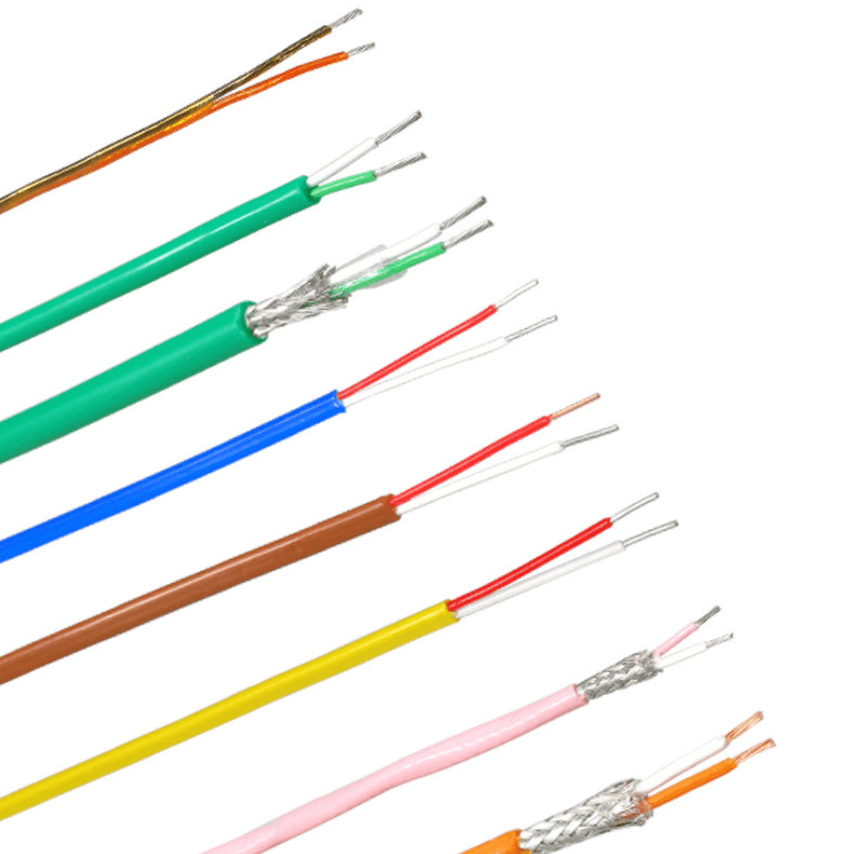
Compensation cables – extension cables Extension cables are used to extend thermocouple circuits; they take the form of electrical cables whose conductors are made of the same materials as those of the thermocouple. Compensation cables are made of other (less expensive) materials whose thermoelectric characteristics are identical up to 100°C. Compensation cables are defined by IEC Standard 584-3, which specifies, among other things, the color coding of the cables as well as their polarity.
Downloads:
Connectors
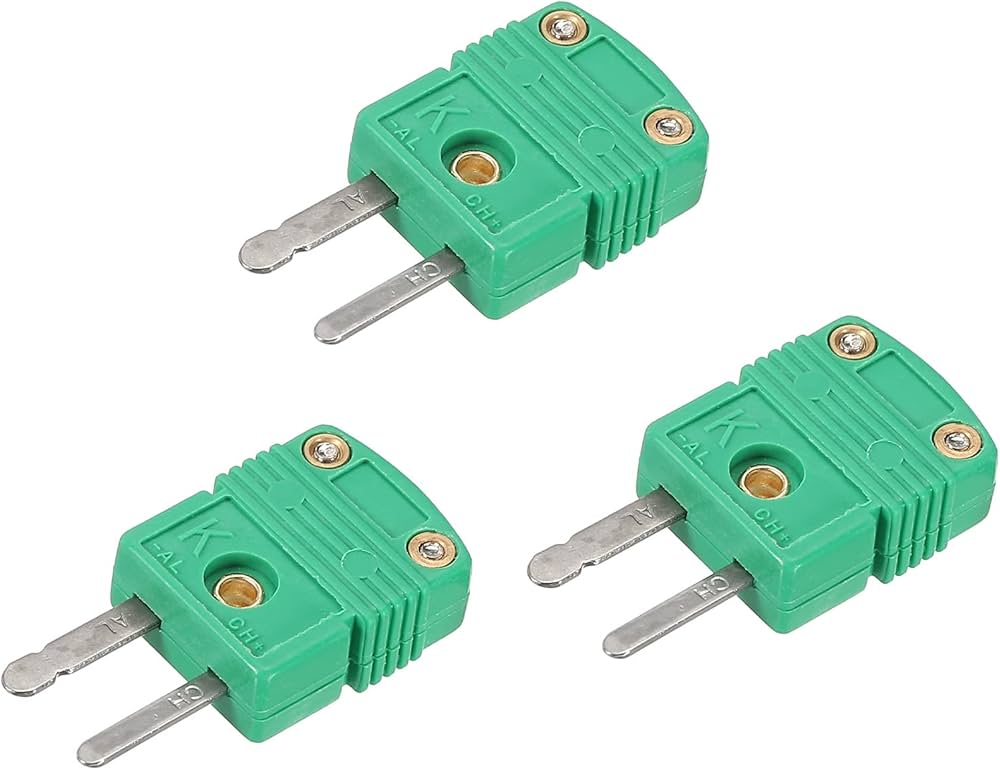
Standard or miniature connectors with offset and polarized contacts are available for K, T, J, E, N, R, B, or S thermocouples. They are also available for connecting platinum probes. Depending on the intended application, standard or miniature connectors can be supplied in 2-, 3-, or 4-pin male or female versions. Thermocouple connectors are manufactured from thermoelectric alloys, allowing connections to be made without compromising the uniformity of the thermocouple. The plastic body of standard connectors is designed to withstand temperatures not exceeding 210 °C. Standard connectors are color-coded.
Downloads:
Flanges
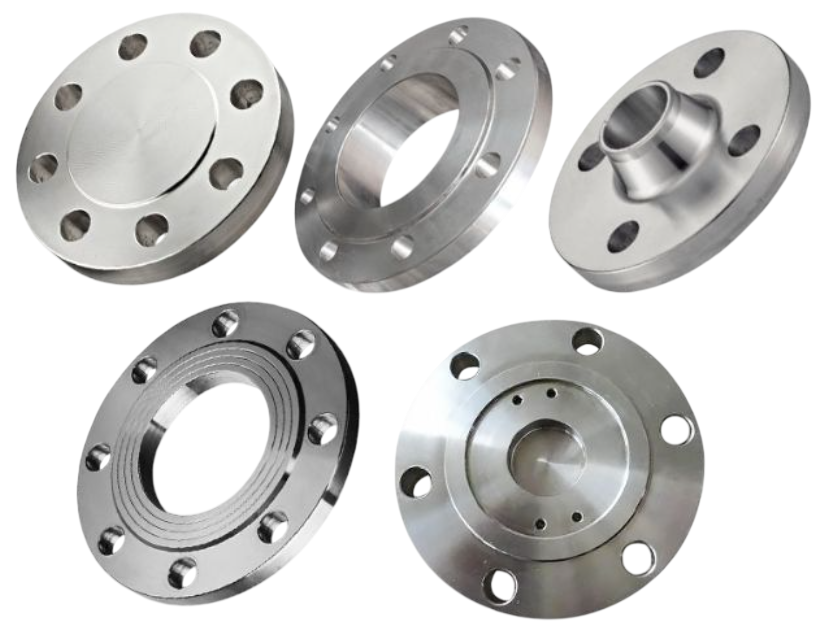
Resistance temperature probes and thermocouples can be equipped with flanges made from materials and designed to be compatible with the required application. The main types of flanges available are: sliding, weld-on, screw-on, solid, or bored. They can be custom-made to customer specifications. These flanges can be manufactured from various materials, such as different types of alloys, low-temperature steels, carbon steels, stainless steels, special steels, Teflon, PVC, and more.
Downloads:
Sleeve
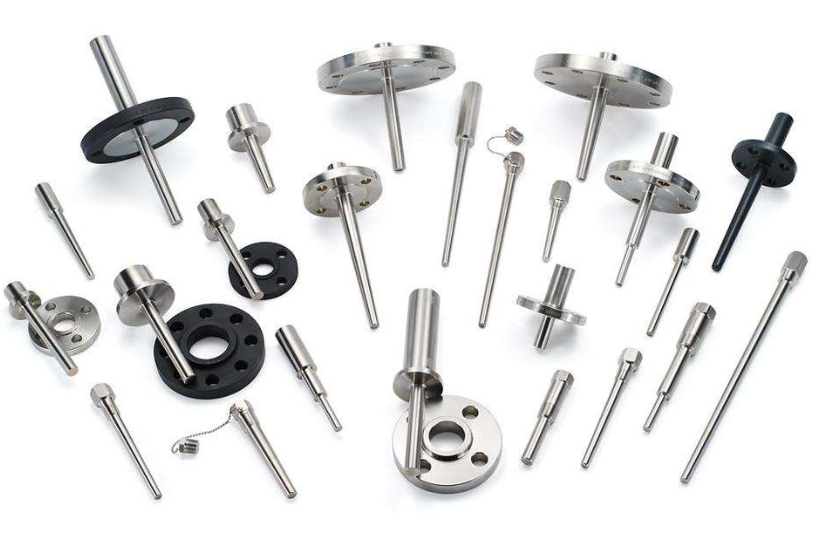
Thermometer wells, more commonly known as “thermowells,” are available in threaded, welded, or flanged configurations. They can be machined from solid stock or mechanically welded. The primary function of the thermowell is to allow for the quick replacement of the sensing element without interrupting process operation, especially in the presence of high pressures or high temperatures. Depending on the operating conditions and required positioning, several design options are available: – Mechanically welded, screw-in type with internal and external threads. – Solid-drilled, welded, with internal threads. – Welded with external threads. – Welded with male/female connection.
Downloads:
DAN-Vis
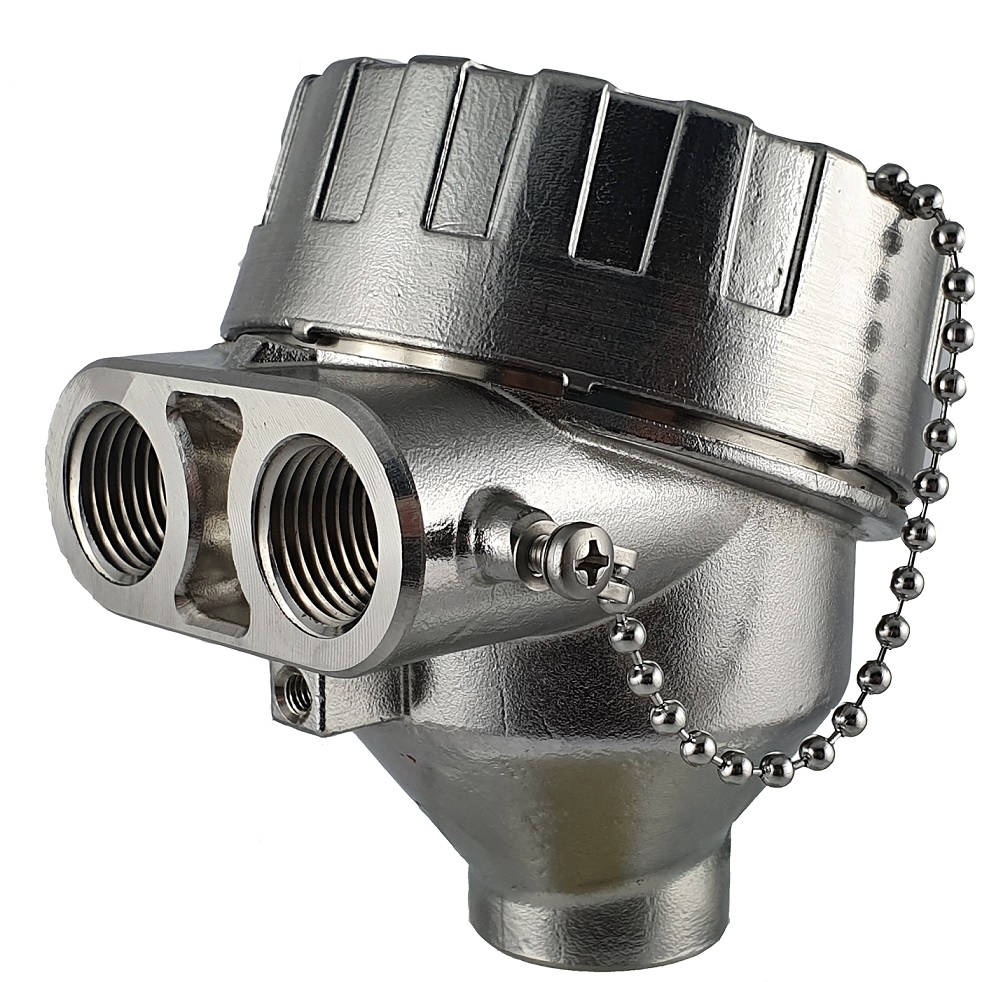
CONNECTION HEADS Type: DAN-Screw / DAN-Clip Material: Light alloy Coating: Epoxy Color: Blue RAL 5015 Gray RAL 9006 Fastening: Screw or clip Center-to-center distance: 33 mm Protection rating: IP 65 (screw) / IP 54 (clip) Cable gland: 1 or 2 M 20