Silo temperature monitoring is an essential method for ensuring the safe storage of grain by continuously monitoring the temperature inside silos. As a manager or farmer, you know that grain is a living material. Without rigorous monitoring, even a slight rise in temperature can quickly ruin months of work.
How these sensors work, why they are essential for your cells, and how to choose the right technology.
Why is the silo temperature a critical factor?
When grain is stored in large-capacity silos, slight temperature fluctuations can signal the onset of a disaster invisible to the naked eye. Monitoring helps mitigate three major risks:
- Pest Infestations: Insects and mites thrive in warm conditions. An undetected hot spot becomes an ideal breeding ground for them.
- Mold Growth: Moisture combined with heat promotes the growth of fungi and mycotoxins, rendering the crop unfit for consumption.
- Fire hazard (self-heating): Internal fermentation processes can cause temperatures to rise to the flash point, threatening the very structure of your facilities.
Sensor Technologies: How Do They Work?
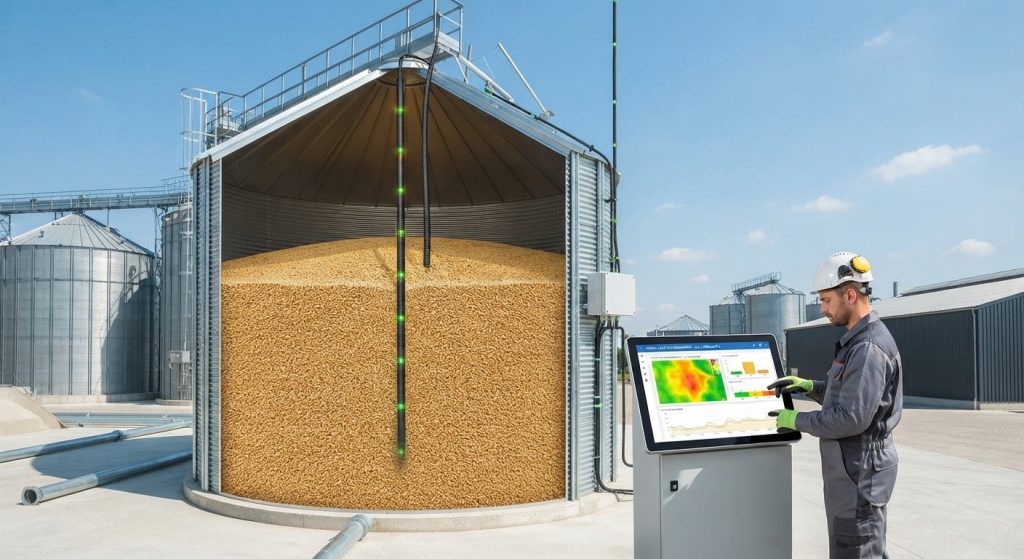
To accurately map the temperature within a column of grain several meters high, multipoint cables or probes suspended from the silo roof are typically used.
Each cable contains several sensors spaced at regular intervals. Two major measurement technologies are competing in the market:
| Sensor Type | Key Benefits | Ideal for… |
|---|---|---|
| RTD probes (e.g., Pt1000) | Very high accuracy, excellent long-term stability, high linearity. | Long-term storage requires flawless traceability. |
| Thermocouples | Durable, cost-effective, require no external power supply, and can operate over a wide temperature range. | Standard industrial facilities seeking low-cost resilience. |
Nowadays, digital sensors (1-Wire systems) are gaining a lot of ground. They incorporate the digitization electronics directly into the sensor, which allows data from numerous measurement points to be transmitted over a single shielded cable, thereby minimizing the risk of interference.
The Shift Toward Connected Silage Temperature Monitoring (IoT)
Gone are the days when you had to climb to the top of the silo or connect a manual reading device at the base of the silo to take weekly readings. Modern silo temperature measurement has gone digital.
These connected solutions offer advanced features:
- Real-time alerts: You’ll receive a text message, email, or phone call as soon as a temperature anomaly or suspicious deviation is detected.
- Ventilation Automation: The control sensors communicate directly with the fans to activate airflow (supply or exhaust) only during off-peak hours or when the indoor/outdoor temperature difference is optimal.
- Constant mobile access: Using a cloud-based app, the silo manager monitors his facilities remotely.
3 Essential Tips for a Successful Installation
- Aim for ATEX certification: Grain storage generates significant amounts of flammable dust. Your temperature measurement cables and transducers must have ATEX certification to prevent any risk of explosion.
- Adjust the mechanical strength: The tensile force exerted on a suspended cable when emptying a silo is enormous (several metric tons). Make sure the cable sheath and anchorage are designed to withstand these shear stresses.
- Optimize your energy costs: By connecting your sensors to smart control tools, you can reduce your electricity bill for ventilation while maintaining perfect grain quality